Strength Beyond Diagnosis: A Para Athlete’s Journey to Keep Rowing
read
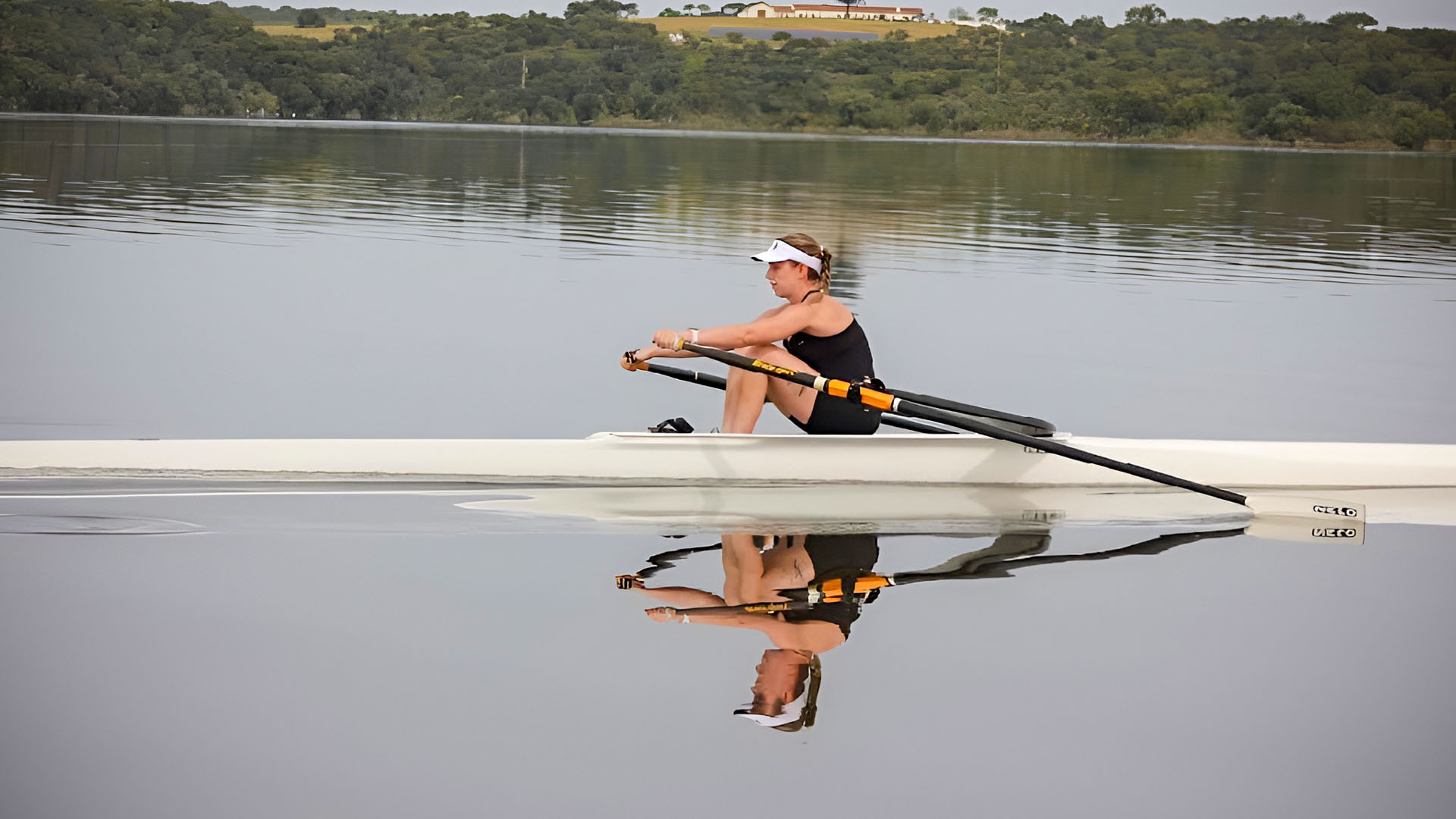
Rebekah Knight is a Welsh para rower. As a teenager, she was diagnosed with a progressive, neurological disorder called Charcot-Marie-Tooth. Just a few months after foot reconstruction surgery, she is now back on the rowing machine with big plans. Discover how the Para Rowing Foundation supports Rebekah, how she adapted her Concept2 RowErg and why she uses EXR for her at-home workouts.
Question: Rebekah, you’re recovering from reconstructive foot surgery. How is that going?
Rebekah: My physio is pleased that, thanks to my active recovery workout routine, I am ahead of expectations. Being fit and strong helps recovery and prepares for the next surgery, this time on my other foot. Currently, my indoor training is all about maintaining cardiovascular fitness and strength.
Q: How did your athletic career get started and what is it like now?
I was diagnosed with Charcot-Marie-Tooth (CMT) disease in 2011, during my first year at university studying Physiotherapy. When I was growing up, I thought that I was just clumsy and lazy. I didn’t really have a reason why I found certain activities harder than everyone else. It wasn’t until I had my diagnosis that I got a better idea of what might work best for me. Eventually, it turns out I’m not lazy at all; I’m absolutely athletic, just in ways I never realized.
The diagnosis allowed me to think, “What sports can I try where I wouldn’t need to run or jump or balance that well?” I started lifting weights because I thought that, since my condition would progressively weaken some of my muscles, I should try to strengthen the others. So that’s what I did.
When I was growing up, I thought that I was just clumsy and lazy.
Then, I discovered rowing by accident after the pandemic. My ankle was hurting quite a lot in the gym at the time. I had a little go on an indoor rower and liked it, but also thought, “This is like a sitting-down deadlift, and I’m good at deadlifts. Bet it’s more fun outdoors.” I’m not very good at doing things by halves, so I joined the GB Para Rowing Talent ID pathway. That’s how I learned to row properly. And now, I’ve been rowing for Wales for the last three years.
Q: What does rowing mean to you?
Rowing is a great sport for people with disability. It doesn’t require jumping or strong ankles, which suits my condition but it’s also really adaptable for people with all sorts of other conditions, too. It was also my first experience in a team sport where I didn’t immediately stick out or fall behind.
Rowing is my passion. I usually follow a quite high-volume training routine: I start work around six or seven in the morning, go to the gym at lunchtime, and then have a rowing session afterward. I’ve got a rowing machine in the dining room, and I also go to the club when I can. It’s just a matter of fitting it all in.
Q: How was your first race?
Before my first race in 2023, I’d never done a 2K on water, had hardly been in a single, and had never rowed on a lake or on a race course. Competitive rowing was terrifying at the time, but representation of people with disability is important to me so I agreed to give it a try.
Competitive rowing was terrifying at the time, but representation of people with disability is important to me.
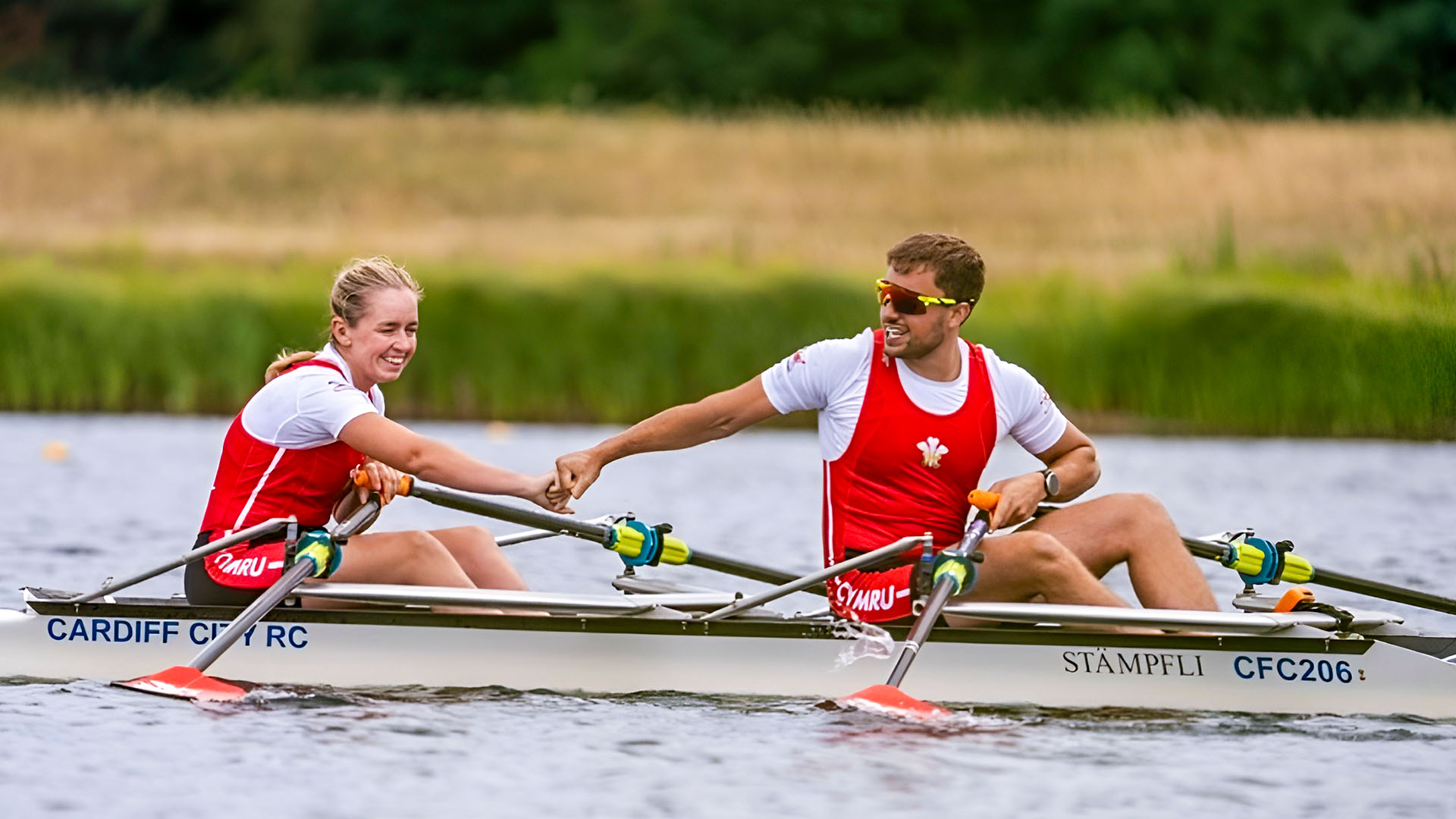
I love both racing in the single or with teammates. Crew boats are fun and technical, but singles let me make immediate changes and directly feel the impact. Last year at the Home International Regatta, I got to row with Miguel Ferreira De Lima in a double, which was great. We trained together six times a week leading up to the race.
Q: How did you discover the Para Rowing Foundation (PRF)?
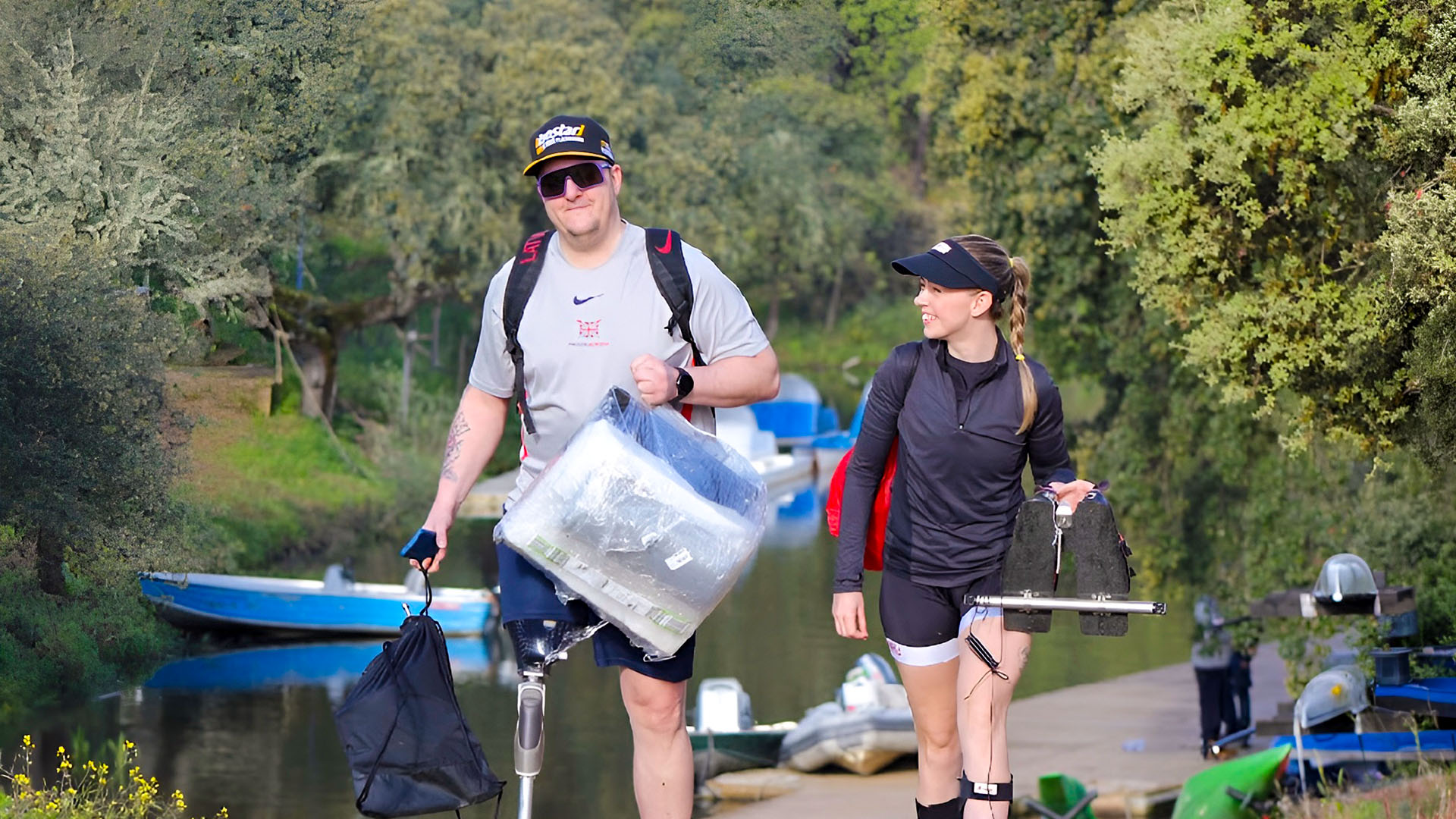
A friend mentioned PRF to me, so I followed its Instagram channel. When I saw a call for a training camp in Portugal, I applied and was accepted! Initially, I thought it was a scam – just too good to be true! I loved the camp. Everything was made for para rowing, from the equipment to the transport, it was all designed to accommodate different disabilities and it was my first experience of being somewhere that para was the complete focus and default. Meeting other athletes with similar experiences was life-changing.
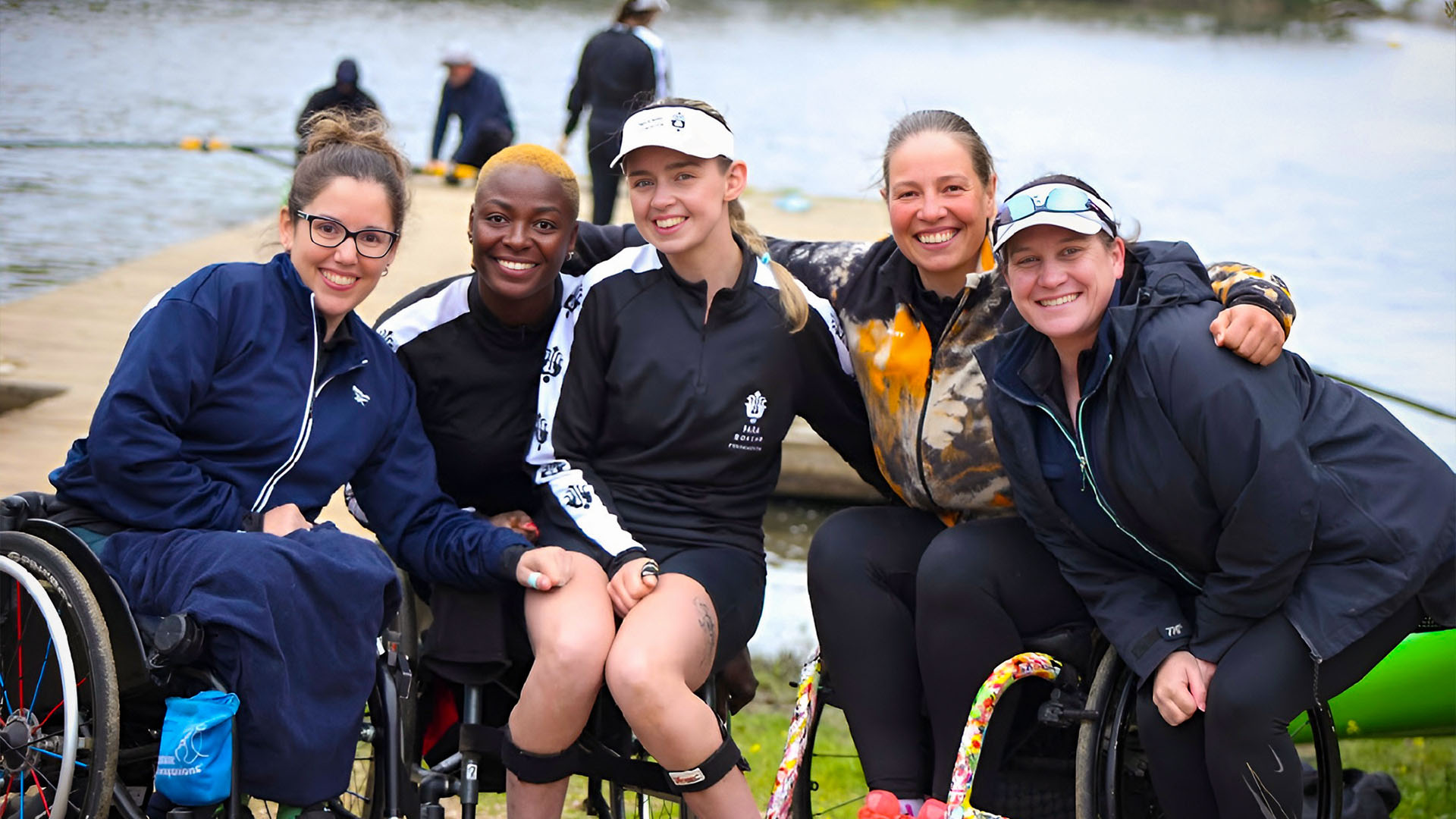
When it comes to PRF, what’s been really special is that it didn’t stop at the training camp. There’s been ongoing support, and all the athletes have stayed in touch. Chairman Steven Dowd still checks in regularly, and if you have problems or concerns, they’re always there to help you find a solution. PRF is a great community with athletes of all para rowing categories that’s been building and growing each year. It makes you feel part of something bigger!
Q: What challenges did you face during your recovery?
After my surgery, I knew that my classification would at least temporarily change from PR3 to PR2. Accordingly, I wouldn’t be able to row with a sliding seat for a while, so I needed to find a way to fix the seat on my rowing machine still. Initially, I was just looking this up online, but there really wasn’t much information.
I contacted Concept2, but they didn’t have much to offer either. They said you could order a particular seat from a different company in the US, but I preferred to find a locally available alternative. I wondered, isn’t there some kind of clamp I could use?
Luckily, PRF had the solution and sent me the right kind of clamps! I ended up going for a simple setup, basically one clamp at the front and one at the back, and it works really well. I was so pleased with it that! I ended up ordering a couple more, so I would have clamps for home and a set for the club, and then a spare set to donate to my rowing club. That way, if any other para rowers turn up in the future, they already have material there. I just felt like I won’t be the last person needing to row with a fixed seat, so wouldn’t it be good if someone approaches the club and they can say, “Oh yeah, we’ve got all you need”?
Q: Having to constantly look for workaround solutions sounds taxing. How does that affect you?
You get the impression that para rowing is an afterthought, or you’re expected to make do and just home-make things and figure it out yourself. Para athletes are really creative people, and we’re used to working around issues one way or another, but wouldn’t it be great — especially since para rowing isn’t a small sport — if there were more official adaptive solutions for indoor rowing equipment?
Wouldn’t it be great — especially since para rowing isn’t a small sport — if there were more official adaptive solutions for indoor rowing equipment?
My ideal situation would have been Concept2 saying, “Yes, this is a solution we’ve developed already. It’s directly available on our website for global shipping.” Para rowing doesn’t feel prioritised, and I think that happens quite a lot. It’s a bit sad, really. It could be better, and that’s why organisations like PRF are filling an important gap. They’re very visible and they speak up, which makes a big difference.
Q: How do you like to train on the indoor rowing machine?
I love training with other people, especially for hard interval sessions. One of my friends from the PRF camp came to visit me last weekend, and we did a lot of erg training together because she trains a lot on the rower as well. Since surgery, though, instead of going to the club for every session, I’ve been doing all of my steady-state work at home on the EXR app. Even then, it’s nice to have something else to look at besides the PM’s screen, because after an hour on the machine it can get really boring.
In EXR, I find it interesting to spot other rowers from different countries, watching avatars overtake each other, and having different achievements pop up on the screen. I even coordinated with a Dutch friend so we could be on the same route at the same time and see each other on the loop, which was really nice. EXR helps break things up and keeps workouts interesting. It’s also a good way to stay in touch across borders when you can’t meet face to face for a rowing session.
I mostly use Just Row. I love this mode! I’m a bit nerdy, so I like that EXR connects with Strava and shows where you’ve virtually been. I think that’s really cool. I’ve also started creating my own training sessions in EXR. Normally, if I row steady state, I wouldn’t just do an hour straight through — I might do three lots of 20 minutes, or two 40-minute blocks. Now I can set those up as custom sessions, which has been really useful.
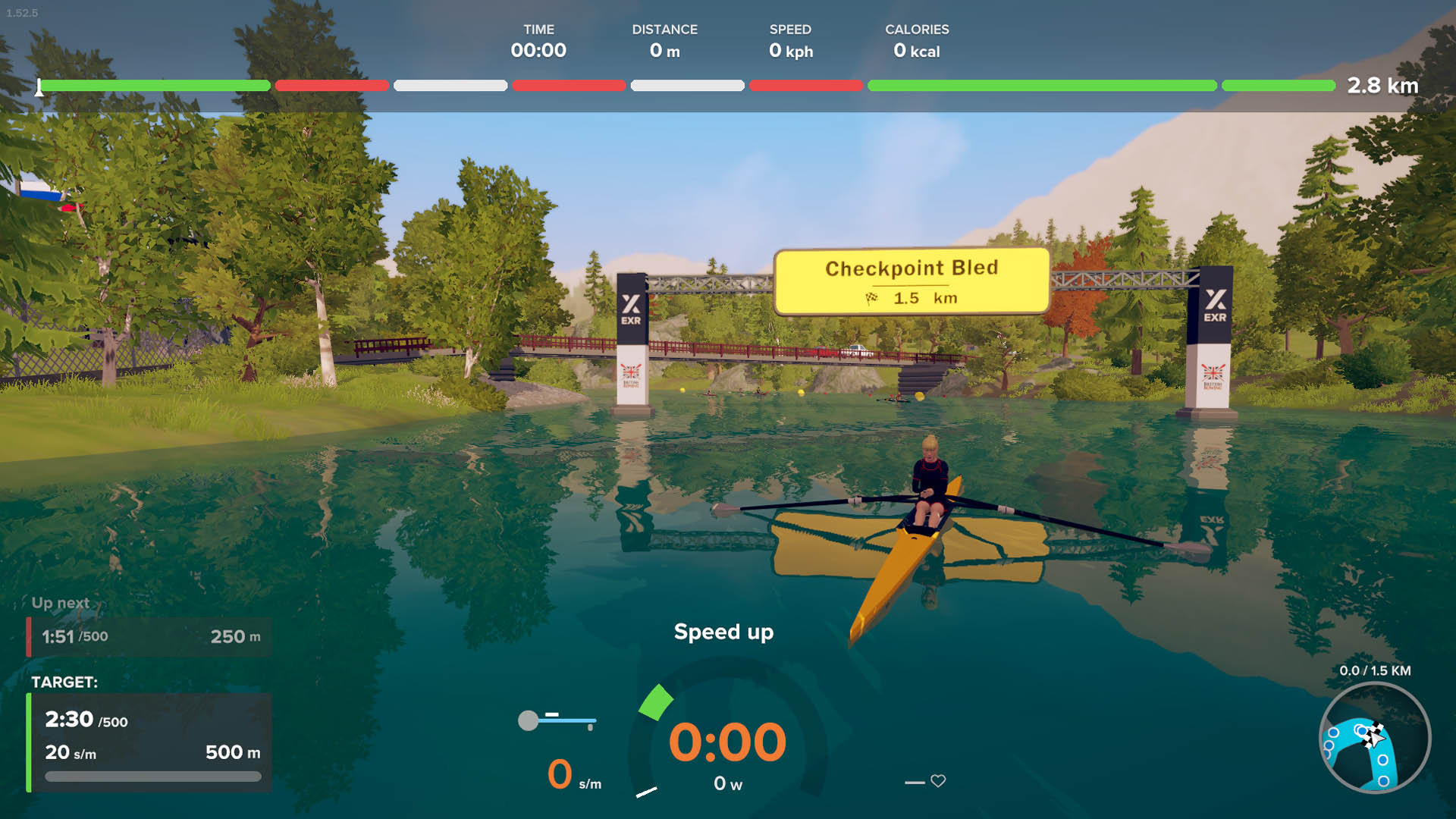
I think I’ll also start doing one session a week where I just pick a pre-made training at random. Because I’m not preparing for any specific race at the moment, I’ve got more freedom and flexibility with my schedule, so it’s nice to be able to log in and choose a rowing workout based on how I feel that day. I also like that there are different time-based options, so if I only have half an hour, I can just choose a half-hour training session. I’m planning to try some of those in the next few weeks.
Q: What indoor rowing workout routine do you currently follow?
At the moment, I’m doing steady state based on heart rate. I keep an eye on the split and heart rate and hope that over time I’ll be able to hold a faster split at the same effort. Between the first and second surgeries, I’m planning to do a 5K to build endurance and see how fast I can go. I did a baseline one, and over the next few weeks I’ll do some more 5K prep pieces, then test again and see how it’s going. I think it’s important to have small goals to look forward to, especially because I’m trying a new type of rowing and everything is basically a PB at the moment, so improvement comes quickly.
After the next surgery, I’ll probably do some 2K work on a fixed seat and see how fast I can get over the shorter distance, before really thinking about what my long-term rowing situation will look like. My second surgery should be around March or April. The first one should be healed by then, so I’ll have one “bad” foot at the time. Recovery for each is around six to nine months, so there’ll be some overlap, but I wanted to get them as close together as possible rather than fully recovering and then starting all over again the following year.
Q: What’s the rowing goal you’re aiming for?
My dream was to win races at the Home Internationals. After winning the 2k in 2024, I came back in 2025 wanting to win both races; the 2k and the 500m, which Miguel and I did. We did it in a good time as well, so I’m really happy with that.
I’d love to go back and race at Henley Womens again. Originally, they didn’t run a para category because there weren’t enough entries. A few years ago there were only three of us. Last year, there were many more, and it became a proper event with heats and everything. I’d love to see that continue to grow, whether that’s by racing again or supporting from the sidelines, helping keep the numbers up and welcoming new people as they come in.
Train with fellow rowers from all over the world online with EXR!
Download for free
Written by , on