Rowing for Weight Loss Guide
read
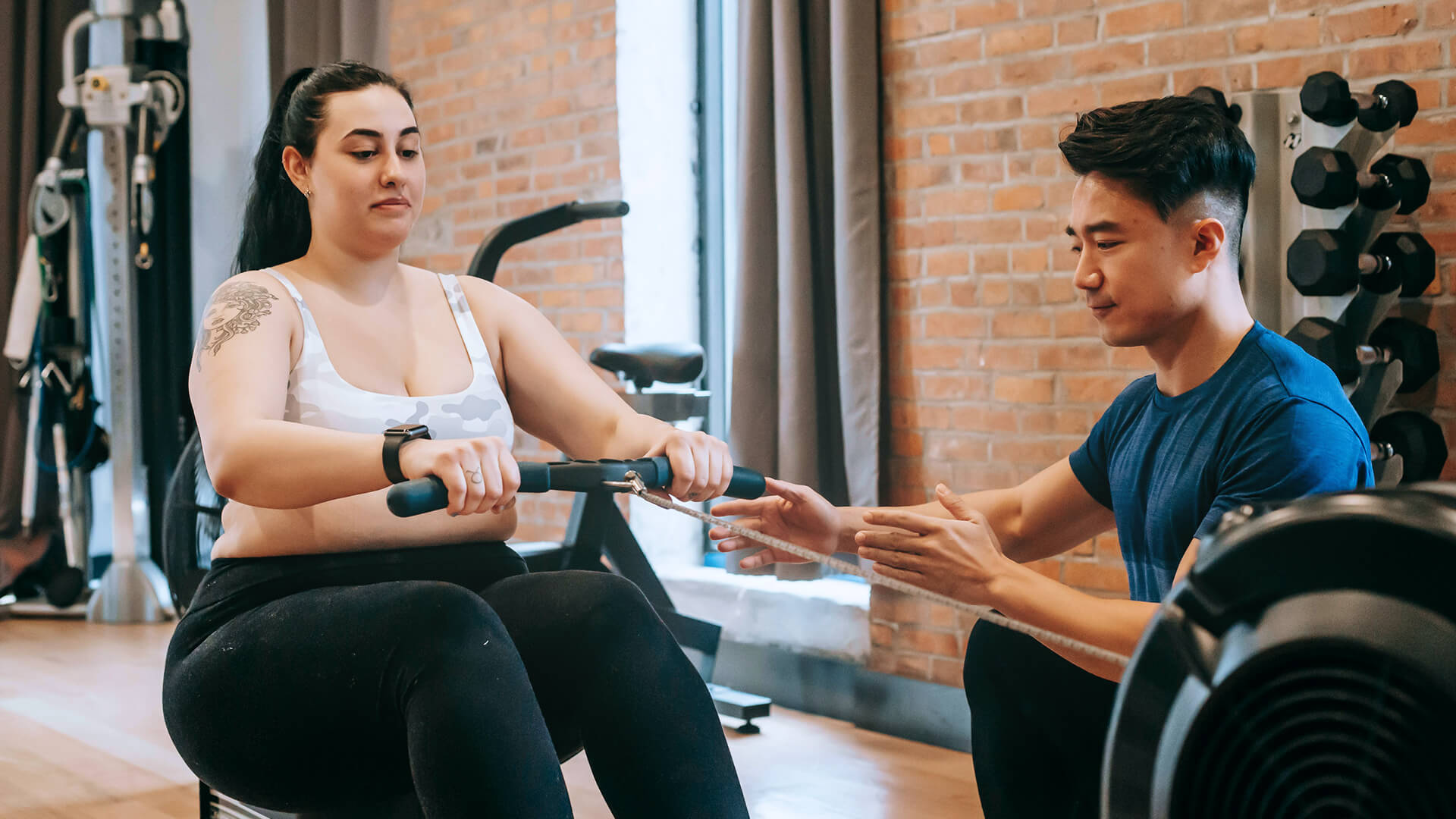
Indoor rowing is a simple but powerful way to support weight loss. It combines strength and cardio in one smooth movement, making it efficient for burning calories while staying easy on your joints. Whether you’re just starting out or already training regularly, rowing can help you build a consistent routine that leads to real fat loss over time.
How to Burn Fat Faster with Indoor Rowing
Indoor rowing is one of the most effective ways to lose weight because it combines cardio and strength in a single movement. You’re not just doing cardio, you’re using your entire body with every stroke. That means you burn calories during the workout while also engaging large muscle groups that keep your overall energy use higher. In simple terms: rowing helps you burn a lot of calories in a short amount of time, without the joint stress that comes with high-impact training.
This guide explains how to use rowing in a practical way for fat loss, not just general fitness.
Why rowing works so well for fat loss
Most cardio machines mainly target either the upper or lower body. Rowing is different because it’s a full-body movement. Each stroke uses your legs, core, back, and arms together. Because so much muscle mass is involved, your body has to work harder, which naturally increases calorie burn. Depending on intensity, rowing typically burns around 400 to 800+ calories per hour. But the biggest advantage is consistency. Since rowing is low-impact, it’s easier to train regularly without putting too much stress on your joints. And consistency is what really drives long-term fat loss.

The right intensity for fat loss
If every rowing session feels exactly the same, progress eventually slows down. Your body adapts quickly, so varying intensity is important. A good weekly structure usually includes three different types of sessions.
Easy steady rowing
These are longer, comfortable sessions where you can still hold a conversation while rowing. They help build endurance, improve aerobic fitness, and support
sustainable fat burning.
Moderate intervals
These sessions alternate between moderate effort and recovery. They increase calorie burn without making every workout extremely exhausting.
High-intensity intervals (HIIT)
Short bursts of hard effort followed by rest periods. These sessions are challenging, but they are effective for improving fitness and increasing overall calorie expenditure in a shorter amount of time. The best results usually come from combining all three throughout the week instead of doing the same type of workout every day.
Simple rowing workouts for fat loss
You don’t need an overly complicated training plan to lose weight with rowing. The most important thing is building a routine you can stick to consistently.
For beginners, one of the best starting points is the beginner version of Pete's Plan. It’s a well-known rowing training plan that gradually builds fitness over time without overwhelming newer rowers. A typical beginner session could include:
- A short warm-up
- Steady rowing at a comfortable pace
- A few short intervals with slightly higher intensity
- A cooldown
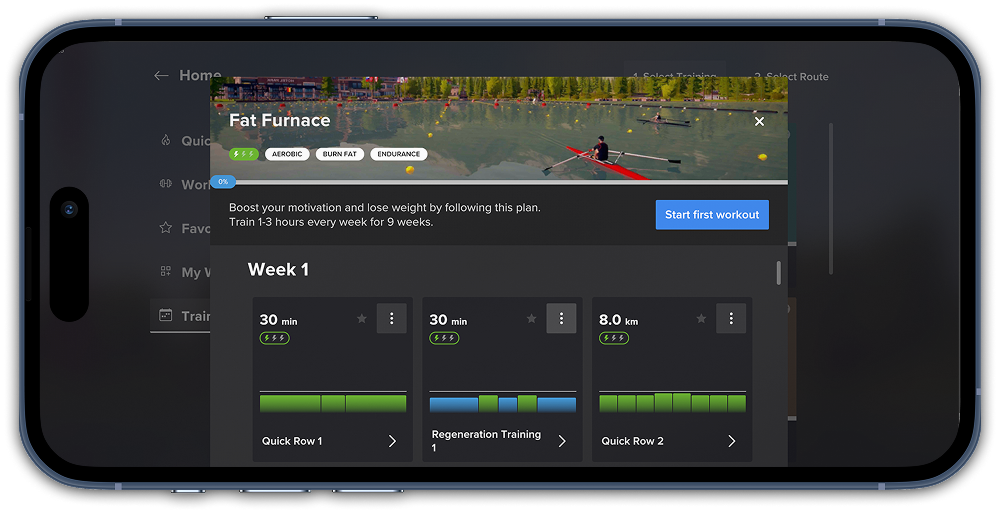
As your fitness improves, you can slowly increase workout duration, add more intervals, or reduce rest time. Another option is using structured rowing apps like EXR. Instead of manually planning workouts, EXR automatically adapts sessions to your fitness level and includes guided workout plans focused on endurance, performance, and fat loss. This makes it easier to stay motivated while still progressing at a pace that feels manageable.
Common mistakes that slow progress

A common mistake is rowing too comfortably every session. Easy rowing has its place, but if every workout feels exactly the same, your body stops adapting. Adding intervals or increasing intensity occasionally is important for continued progress.

Another issue is poor rowing technique. Many beginners rely too much on their arms and forget that rowing power mainly comes from the legs. Inefficient technique not only reduces calorie burn, but can also make workouts feel harder than they should.

Nutrition is another factor people often underestimate. Rowing can help create a calorie deficit, but food choices still matter. Focusing on balanced meals with enough protein, whole foods, vegetables, and sufficient hydration makes it easier to recover and maintain consistent energy levels. Crash diets usually lead to short-term results, while sustainable eating habits support long-term fat loss.
Rowing vs other cardio
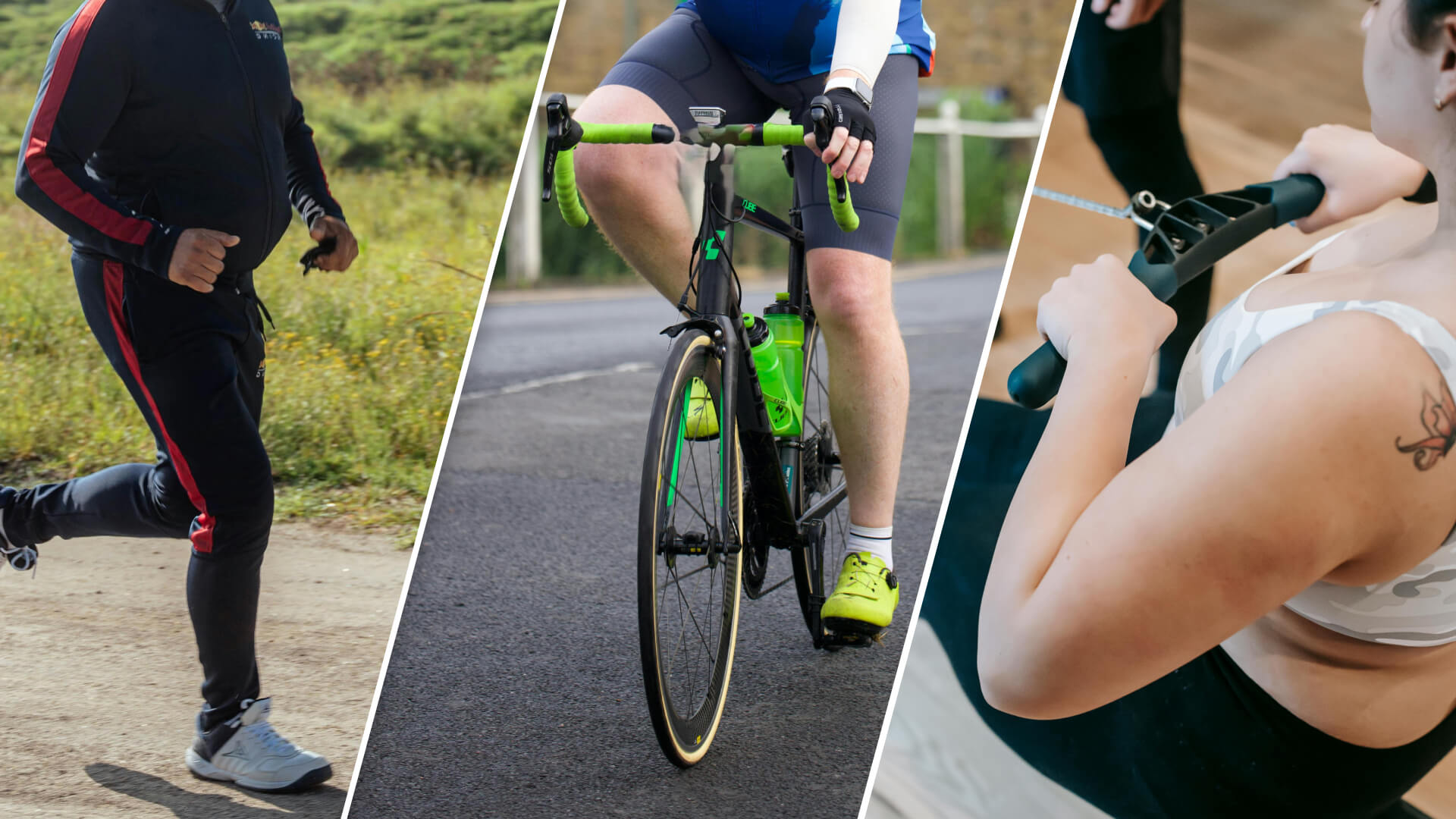
Running, cycling, and rowing can all be effective for weight loss, but they challenge the body in very different ways. The best option often depends on your fitness level, body type, goals, and how sustainable the activity feels long term.
For many people, the biggest challenge is not finding the “perfect” cardio workout. It’s finding one they can consistently stick with without injury, boredom, or burnout. That’s where rowing stands out.
Running
Running is often seen as the go-to cardio exercise for weight loss because it burns a large number of calories in a relatively short amount of time. It’s also extremely accessible. You don’t need much equipment besides a pair of running shoes, and you can do it almost anywhere. Because running is weight-bearing and repetitive, it can be very effective for improving cardiovascular fitness and endurance. Higher-intensity running sessions can also significantly increase calorie expenditure.
However, running also comes with more impact on the body. Every stride places stress on the knees, ankles, hips, and lower back. For beginners, heavier athletes, or people returning from injury, this can make consistent training difficult over time. Running also mainly targets the lower body. While the core and upper body are involved to some extent, the workload is much more concentrated in the legs compared to rowing. For some people, running is highly motivating and enjoyable. For others, the physical impact eventually limits consistency.
Cycling
Cycling is much gentler on the joints compared to running, which makes it a popular option for longer cardio sessions and recovery-focused training. It’s easier to maintain for extended periods because the movement is smooth and low-impact. Outdoor cycling can also feel mentally engaging because of changing scenery and pacing. Stationary cycling is commonly used for calorie burning and endurance training, especially in spin-style workouts.
The downside is that cycling primarily focuses on the lower body. Your quadriceps, glutes, and calves do most of the work, while the upper body remains relatively inactive. This lower total muscle involvement can reduce overall full-body activation compared to rowing. Cycling is also highly dependent on intensity. Casual cycling sessions may not burn as many calories as people expect unless resistance or effort levels are increased.
That said, cycling remains an excellent option for people looking for lower-impact cardio with good endurance benefits.
Rowing
Rowing combines the advantages of both. Like running, rowing can produce a high calorie burn and strong cardiovascular benefits. Like cycling, it remains low-impact and easier on the joints. But rowing adds another advantage: full-body engagement. Each rowing stroke uses the legs, glutes, core, back, shoulders, and arms together in one coordinated movement. Around 80 to 85 percent of the body’s muscles are involved while rowing, which increases total energy demand and overall calorie expenditure. This full-body involvement also helps make rowing feel more balanced compared to cardio exercises that mostly focus on the lower body.
Another major advantage is scalability. You can row at a very light intensity for recovery and endurance training, or push extremely hard during interval sessions for conditioning and fat loss. That flexibility makes rowing suitable for beginners as well as advanced athletes. Because rowing is seated and low-impact, it’s often easier to recover from frequent sessions compared to high-impact cardio like running.
For people focused on long-term consistency, injury prevention, and efficient calorie burn, rowing offers one of the best overall balances in cardio training. That combination is exactly why rowing has become increasingly popular for both fitness and sustainable weight loss.
How often should you row?
For most people, rowing three to five times per week is a good balance. Sessions can range anywhere from 20 to 45 minutes depending on intensity and experience level. Combining steady rows with interval sessions usually works best for balancing fat loss, recovery, and long-term consistency. The goal is not to train as hard as possible every day. The goal is building a routine you can realistically maintain over time.
Final takeaway
Rowing is one of the most effective forms of cardio for weight loss because it combines calorie burn, full-body engagement, and low-impact training in one movement. But the biggest factor is consistency. If you row regularly, vary your workout intensity, and maintain a sustainable calorie deficit, fat loss becomes a natural result over time.
Ready to start your rowing journey?

Written by , on